Scott Aboretum & Gardens


Members’ Plant Exchange & Sale

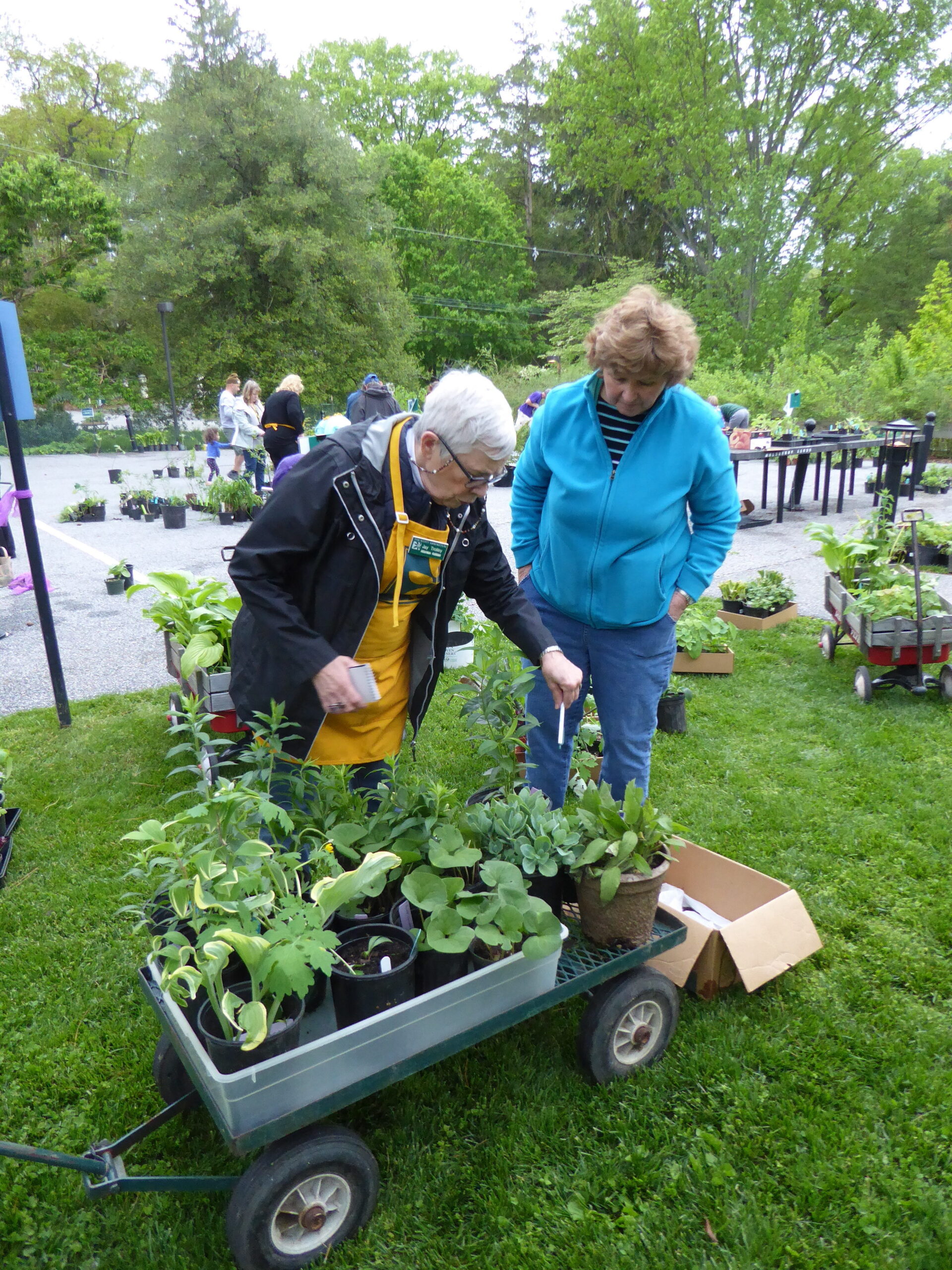
Exchange plants from your garden for new plants brought by fellow members.

The treasure hunt is back! Exchange plants from your garden for new plants brought by fellow members.
The Schedule

Friday, May 8

2 – 4 pm – Plant Drop-off
Volunteers will help unload your plants, and issue your tokens and line-up number for Saturday’s Exchange.

Saturday, May 9

8:30 – 9:30 am – Plant Drop-off – Wister Center Parking Lot
Volunteers will help unload your donations and give you tokens and line-up numbers for the Exchange. Enjoy refreshments, get to know fellow Scott members, and preview the plants on the lot.

10:00 – 10:30 am  – Exchange for Plant Donors & Members
Choose new plants and spend your tokens. Only tokens, no cash accepted during the Exchange.

10:30 -10:40 am – Time Out
Take a break while volunteers reset the lot for the Sale.

10:40 am – noon – Plant Sale
Indulge and buy as many plants as you like using tokens, cash, or checks. Sorry, no credit cards.

Exchange plants from your garden for new plants brought by fellow members.  Typically find plants for every niche in the landscape.

Start thinking now about divisions, surplus, or highlight plants you can share. Pot up perennials, annuals, and woody plants as early as you can in the spring. See ‘The Rules’ about what to bring and not to bring.

No plants to exchange? No problem!  You can buy plants at the Sale following the Exchange. Hundreds of plants remain after the Exchange for purchase by members. Most are priced at just one dollar.

How to Join the Fun

The Exchange

…for all Scott members

  • Pick up free pots and labels from the Arboretum to help you get started.
  • Check out plant propagation for helpful hints on getting the most new plants out of your landscape.
  • Receive one token for every three plants you contribute.
  • Review ‘The Rules’ on the back page of the brochure or online below.
  • Come to the Exchange and spend your tokens on new plants, generally priced at just one token each.
  • Jump in: Members who did not donate plants can check-in, receive one free token, and enter after donors during the Exchange.

Not a member? The Plant Exchange and Sale are open only to Associates of the Scott Arboretum. Become a member and join the fun. New members who have joined since the 2025 Members’ Plant Exchange will receive three tokens redeemable at the Exchange!

The Sale

…for all Scott members
Once the Exchange ends, hundreds of plants remain for sale to all whether or not you brought plants to donate. Only a few larger or exceptional trees or shrubs are priced higher than one dollar.

Volunteer

Be an Exchange volunteer! Help to accept plant donations, pot up Arboretum-provided plants, advise shoppers, and more! Learn more about volunteers at the Scott Arboretum & Gardens.

Take Note

  • This event is for Scott Arboretum members only. Join now or volunteers will be available on Friday and Saturday to review and renew memberships or help you join. Please bring your current membership card to the event.
  • Perennials, tropicals, annuals, trees, shrubs, vegetables, and herbs are all welcome.
  • All plants must be potted, well-established, and labeled with their Latin name. Help with plant ID and Latin names is available before plant check-in.
  • No more than nine of the same type of plant and no more than three of aggressive or extremely common species will be credited.We will not give credit for unhealthy or invasive plants.
  • Once plants are checked in, you will be given one token for every three qualifying plants contributed. Additional tokens may be given for more valuable plants.
  • Your tokens, valued at one dollar, may be used during both the Exchange and Sale to purchase plants.
  • No Credit Cards! Cash, checks, and tokens may only be used to purchase plants during the Sale.
  • During the Exchange, members may select one each of as many different types of plants as their tokens allow. During the Sale session, you may purchase as many of any given type as you wish.
  • Entry for the Exchange is by number. When you arrive or drop off plants, check in for your line-up number.

Continued below…

Restricted and Limited Plants (What Not to Bring)

We try to assemble an interesting and eclectic mix of plants that appeal to the wide variety of plant enthusiasts the event attracts. We limit the quantity of plants of one variety that participants may contribute so that we’re not overwhelmed with that one variety. There are also several specific plants listed below that are further restricted or not accepted.

1. No more than nine of any one kind of plant.

For example, you could bring nine Hosta ‘Blue Angel” and also nine Hosta sieboldiana ‘Elegans’.

2. On occasion, we do offer large numbers of highly desirable plants made available by the generosity of donors.

Please contact us in advance if you are considering such a donation.

3. No more than three of the following may be exchanged for credit

Over the years, we have identified some plants that are consistently left over at the end of the Sale, so we accept only a few of the following plants from each contributor.

Asters – unknown cultivar or species (aster)
Convallaria  (lily-of-the-valley)
Liriope spicata (lilyturf)
Monarda – unknown cultivar or species  (bee balm)
Oenothera speciosa (evening primrose)
Rudbeckia – unknown cultivar or species (black-eyed Susan and coneflowers)
Tanacetum parthenium (feverfew)
Tradescantia (spider lily)
4. The following plants are not accepted because they are considered to be invasive or too common to appeal to shoppers
Acer palmatum – seedlings (Japanese maple)
Aegopodium (goutweed)
Buddleja – seedlings (butterfly bush)
Hemerocallis fulva (orange daylily)
Houttuynia (chameleon plant)
Lysimachia clethroides (gooseneck loosestrife)
Miscanthus sp. (silvergrass)
Pachysandra terminalis (Japanese spurge)
Perilla frutescens (shiso)
Pinellia (cow dipper)
Vinca minor – unknown cultivars (periwinkle)

5. In addition to the plants listed above, we will decline any plants that are generally recognized as being invasive.

For a more complete list, please consult the following sources: Pennsylvania Department of Conservation and Natural Resources.

6. We reserve the right to decline any plants that are wilted or in otherwise poor condition.

Helpful Tips
Plant Propagation

  • Please divide and transplant a few weeks before the Exchange & Sale. Perennials can generally be divided starting early in April but need time to recover before the event.
  • To divide perennials, lift the plant from the ground with a shovel or fork. Use a sharp spade to cut the clump into pieces. Transplant each new piece into a disposable pot, filling it with potting soil.
  • Store the potted divisions outside and keep up with watering since container plants dry out more quickly than those in the ground.
  • If you plant seeds indoors and plan to bring homegrown vegetables, herbs or flowers to the Exchange, be sure to harden them off by exposing them to progressively longer hours outside before you bring them to the Exchange.

Below are some additional links to tips on plant propagation.

Pots

Free recycled pots and plastic labels will be available for you at the Arboretum. Staff and volunteers can direct you to them during normal office hours, or call if you need other assistance – 610-328-8025.

    Propagation Resources

    You can, of course, do species-specific web searches on dividing or propagating your individual plant selections. Below are some good general University articles on methods and timing of propagation. We also have useful references at the Scott Arboretum library, including the American Horticultural Society Book of Plant Propagation.

    Labeling

    Please include the Latin name on your labels. Specificity helps.

    Hemerocallis—Yellow Daylily is acceptable, but if you know it to be H. ‘Golden Chimes’, please let everyone know.

    Pencil weathers well on labels; if you use a pen, please make sure it is waterproof! A brief description or a photo printed from your computer will make your plant, and you, very popular.