
Guest Author: Zoe James, 2025 Summer Horticulture Intern

Hydrangea aspera ‘Macrophylla’ – large-leaved scabrous hydrangea
If you asked all of the 2025 Summer Interns at the Scott Arboretum and Gardens to name our favorite hydrangea, you’d hear one unanimous answer: Hydrangea aspera ‘Macrophylla’. And we’re not the only ones who regard it so highly; it earned the Award of Garden Merit from the Royal Horticultural Society, so it’s officially fabulous.
The contrast between the delicate outer ring of large, white, sterile florets and the purple-mauve, fertile flowers in the center is magical. I think they resemble tiny flying saucers and each flower cluster is its own little galaxy. The foliage is just as impressive. Its large, dark green leaves can grow up to 12 inches long and are covered in a soft fuzz, giving it a velvety look. Despite its bold size, (up to 13 feet tall and wide) this hydrangea remains sturdy and upright, not the least bit floppy or unruly. You’ll find this showstopper in the Terry Shane Teaching Garden, right outside the Cunningham House. Take a moment to sit on the perfectly placed bench nearby and soak in the scene. You’ll likely see pollinators buzzing from bloom to bloom. In the winter, even after the flowers are gone, the plant keeps giving. Its exfoliating bark peels back in strips, adding interest and texture to the winter landscape.
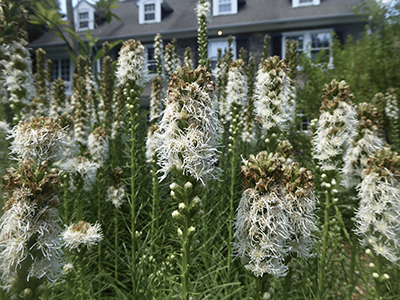
Liatris spicata ‘Floristan White’ – blazing star
If you’re looking for a vertical accent that’s both striking and pollinator-friendly, Liatris spicata ‘Floristan White’ might just be your new favorite plant. A stunning white-flowered cultivar of the native purple blazing star, this flower brings brightness and contrast to any garden or meadow planting.
The tall, upright flower spikes bloom from the top down, and grow 3 to 4 feet tall. The foliage adds a nice feathery texture before the blooms really start showing off. The white really pops, especially in contrast with deeper colors or late-summer greens. These stems are strong and not too floppy. And when they sway in a breeze, the movement guides your eye upward, creating rhythm and structure in the landscape. Pollinators also love it! It’s an excellent cut flower, adding both height and freshness to summer arrangements. You can find it planted at the West Garden.

Echinops bannaticus ‘Blue Glow’ – globe thistle
If you’re looking to add bold texture and a pop of unexpected color to your garden, Echinops bannaticus ‘Blue Glow’, is a great option. Its smoky blue, spherical flowers hover above the garden on sturdy, upright stems that can reach up to 4 feet tall. The genus name Echinops, comes from the Greek word echinos, meaning hedgehog – a perfect nod to the adorable, spiny-looking flower heads.
Planted along the edge of the Entrance Garden near the Hamamelis x intermedia ‘Luna’, these flowers are constantly buzzing with pollinators. It’s also an excellent cut or dried flower, lending bold shape and long-lasting color to arrangements. The plant’s drought, deer, and rabbit resistance makes it ideal for tough garden conditions, especially in poor or dry soils, as long as they’re well-drained. Note that it develops a deep taproot, which makes it a survivor in dry climates, but also means it’s not easy to transplant or divide once established – so plant it where you want it to stay!