
Plants of the Week by Caelon Shugrue, Public Horticulture Intern
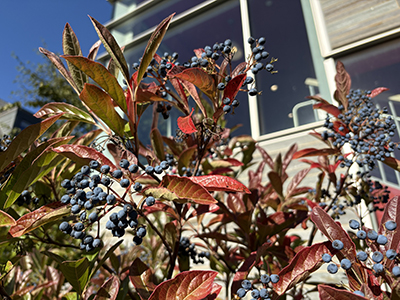
Viburnum nudum ‘Winterthur’ – smooth witherod
The Philadelphia Horticulture society awards a gold medal to plants every year for hardiness, weather tolerance, ease of growing, and aesthetic appeal. This deciduous shrub, Viburnum nudum ‘Winterthur’ won the Plant of the Year award in 2007 due to its notable tolerance for a wide range of soils and impressive seasonal displays. As the cultivar name suggests, this plant was introduced by Winterthur Gardens.
Viburnum nudum is native to the eastern and southeastern United States, found in bogs, swamps, and woods. This time of year the foliage is quite striking – the glossy green leaves turn dark red, maroon, and purple. This colorful foliage serves as a backdrop for the equally impressive berries. These dusty blue berries slowly ripen to a dark purple throughout the fall. Birds, such as cedar waxwings, will help themselves to these tasty berries that often persist into early winter. You can find this award-winning plant in our Gold Medal Garden along with other woody and perennial plants that have been selected for their exceptional ability to thrive in our local climate.
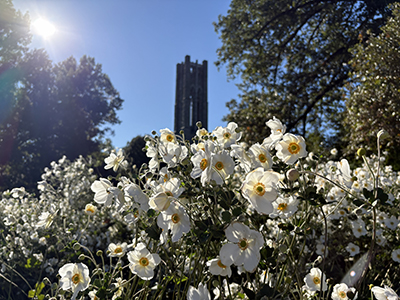
Anemone × hybrida ‘Honorine Jobert’ – Japanese anemone
Magill walk is well-known for its iconic allée of swamp white oaks, but what is showing off astounding beauty this time of year are the Japanese anemones under their canopy. Simple white flowers emerge from basal foliage in August and bloom through October. Compared to dwarf anemones (which I mentioned in a previous Plant of the Week article), these anemones are much taller. The basal foliage of this Japanese anemone reaches about 12 or 18 inches, and the flower stalks get to 4 feet tall. They spread by creeping rhizomes and, as seen in Magill walk, have no issue forming a sizable clump.
Japanese anemones have been cultivated for years due to their reliable clumping form and long bloom time, suitable for any garden. The UK’s Royal Horticulture Society awards plants displaying excellent performance, health, and disease resistance. ‘Honorine Jobert’ received this award in 1993 due to its exceptional reliability and low maintenance. In 2016 the Perennial Plant Association made note of its excellence as well and awarded it the Perennial Plant of the Year. If you are looking for late summer and early fall interest, this plant is renowned for its bright white accents in any and all gardens.
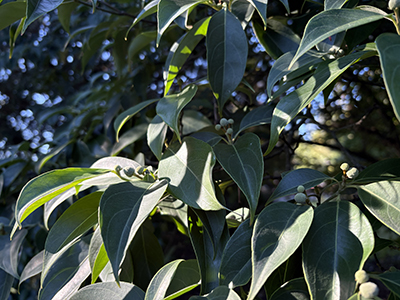
Cornus capitata ssp. angustata – evergreen dogwood
As many deciduous trees change color this fall, evergreen trees will remain lush backdrops to stunning fall color. This dogwood, considered evergreen or semi-evergreen, will not drop its leaves. Instead, some of the leaves may take on a deep plum tone. This tree is located in the upper Pinetum, somewhat tucked away behind the Dining Center and the new post office. It is worth making the trip down to this section of the Pinetum due to this tree’s glossy green foliage and next year’s dainty flower buds.
Native to the Himalayas, this evergreen dogwood is found in forests and mountainous regions. It can reach up to 50ft in its natural habitat, but if planted ornamentally in your garden it probably won’t breach 20ft. It is planted for its year round interest: it has attractive flowers consistent with other dogwoods, persistent fruit that attracts birds, and evergreen foliage. Flower buds for the spring and summer are formed in autumn and can resist cold temperatures and frosts.