
Guest author: Jake Cammarota, 2025 Summer Horticulture Intern
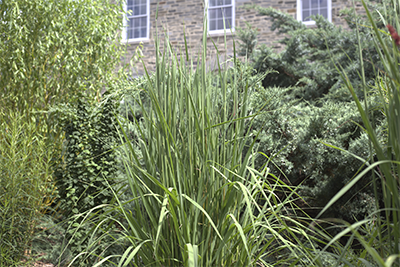
Sorghastrum nutans ‘Golden Sunset’- Indian grass
When in the John W. Nason Garden at the Scott Arboretum & Gardens, there are many large-leaved plants, tall plants, and spreading plants. While Sorghastrum nutans ‘Golden Sunset’, or Indian grass, may not be the winner in any of these categories, this plant still holds its own against any of the other plants in the garden. Sorghastrum nutans ‘Golden Sunset’ is an architectural, anchoring plant that adds structure to the garden throughout the summer, before having beautiful, feathery flowers and seeds through the fall and winter. Right now, the blue-green foliage and medium stature may not look like much, but these vertical stems – when interlaced with summer flowers and horizontal leaf textures – do an excellent job of framing the rest of the plants. The flowers that come in the fall are an amazing golden color (hence the cultivar name) that wave back and forth in the wind, transporting you to the Midwestern prairies.
Speaking of the prairies, Sorghastrum nutans ‘Golden Sunset’ is a selection of the straight species from the University of Minnesota. The straight species of this plant is one of the four main prairie grasses of the United States, giving it ecological and historical value. The ‘Golden Sunset’ cultivar was selected for early golden plumes and an upright habit. This perennial grass thrives in full sun, and truly puts the “golden” in golden hour, as it shines during sunrise and sunset. The persistent seed heads and foliage provide food and nesting material for birds, while keeping their structure through the winter, offering year-round interest. Being a warm-season grass, Sorghastrum emerges a little later in the spring, after the soil temperatures warm up, so cut last year’s stems back in late winter to see the new growth flush out. With our summers getting more unpredictable, this plant is a reliable grower that can withstand both droughts and occasionally moist soils, so it will be an effective garden plant for years to come!
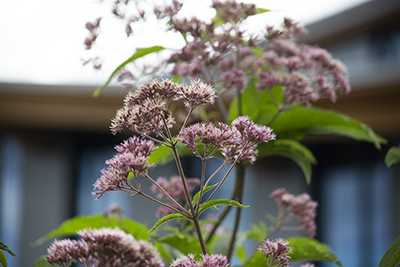
Eutrochium purpureum – Joe-Pye weed
Following along with the theme of verticality and height in a garden, my second plant is Eutrochium purpureum, or Joe-Pye weed. Found in the triangle bed in front of the Dining and Community Commons, this purple-flowering perennial has huge clusters that are covered with bees, moths, and butterflies! The domed flower clusters can be up to 18 inches across, with brilliant pink, purple, and whitish flowers that bloom from mid-summer into early fall. These domes are a hub of pollinator activity, with numerous different types of insects covering the flowers right next to each other. In addition to feeding nectar to the butterflies and moths, it is also a host plant for the caterpillars, allowing your garden to support many generations of butterflies. After the flowers are done, be sure to use the attractive seed heads throughout the winter in arrangements!
This plant is intolerant of dry soils, and creates dense clumps of tall stems that can reach up to 10 feet tall. Eutrochium purpureum has whorled leaves, meaning more than two come out at each node, which is where the genus name comes from. Effective in pollinator gardens due to its extremely attractive flowers, sweet Joe-Pye weed will add great height to perennial gardens, and can be paired with milkweeds and coneflowers to create a great summer display. Eutrochium purpureum is native to the Eastern U.S., where it can be found along riverbanks and in moist prairies. This perennial is low-maintenance and should be cut back before the spring to allow for the flush of new growth. The towering stems of Eutrochium purpureum are a great addition to any garden that stays moist.
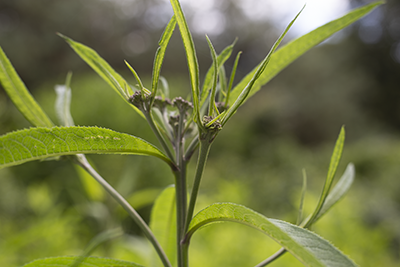
Vernonia gigantea – tall ironweed
When passing by the upper Biostream, just down the hill from the Cut Flower Garden, you are sure to notice a towering plant with dark green foliage. This is Vernonia gigantea, or tall ironweed; the final addition to the height and structure theme of this Plant of the Week. This perennial flower’s size may make it look like a shrub, but it must be cut back every year to induce the new herbaceous growth. One of the top performers in the Mt. Cuba Center Trial Garden Vernonia trials, this plant is sure to be a showstopper in the Mid-Atlantic garden. With stems that can reach up to 15 feet tall and attractive pink flowers that bloom from late August until October, this plant will add height and a splash of color in the fall. Another clumping plant, tall ironweed is a dense perennial that creates a solid mass in the garden. While you’ll have to wait until late summer for the deep-purple flower, this plant still stands as a strong anchor point in the garden. While milkweeds are known for their monarch butterfly interactions, this plant also contributes to their southern migration, as it blooms while they are flying down to Mexico. In addition to the monarchs, this tall ironweed also attracts swallowtail butterflies and many other pollinators.
Vernonia gigantea performs well in a variety of cultural conditions, offers a brilliant backdrop to borders and other smaller gardens, and can be a focal point in a circular bed if you don’t have the space for a tree. If you are more into maintenance, deadheading the spent flowers of this plant will encourage a rebloom, extending the flowering period. This plant prefers full sun, so it is perfect for the back of a sunny garden area, with layers of different heights in front of it.