
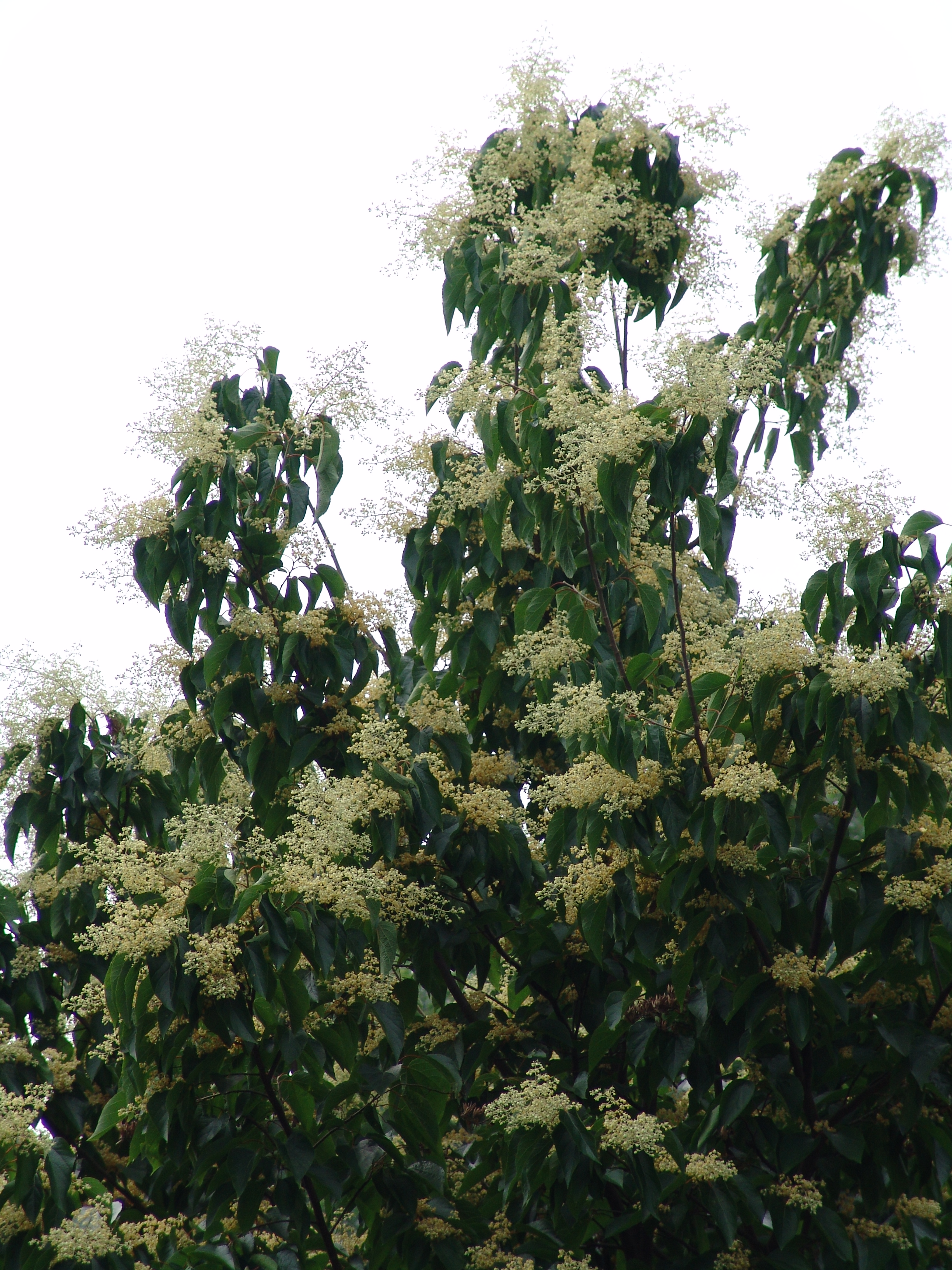
Last week, world renowned plantsman Roy Lancaster lectured at our 12th annual Woody Plant Conference. On the Thursday before the conference I had the opportunity to give Roy and some of the other speakers a tour of the Arboretum. As we headed back to the Arboretum offices Roy spotted a specimen of Poliothyrsis sinensis growing next to the Cunningham House. He stated that this was the most impressive tree he had seen that day (we had also visited the Morris Arboretum in the morning).
In 1993, we received a few seedlings of Poliothyrsis sinensis from J. C. Raulston at the North Carolina State University Arboretum (now the J. C. Raulston Arboretum). For several years they were grown on in our growing area. When they were mature enough to add to the Arboretum’s collections we added one to the Entrance Garden; another one is planted near College Avenue next to the Arboretum’s parking lot, and a few more are between the site of the future Education Center and Greenhouse and Mertz Dormitory.
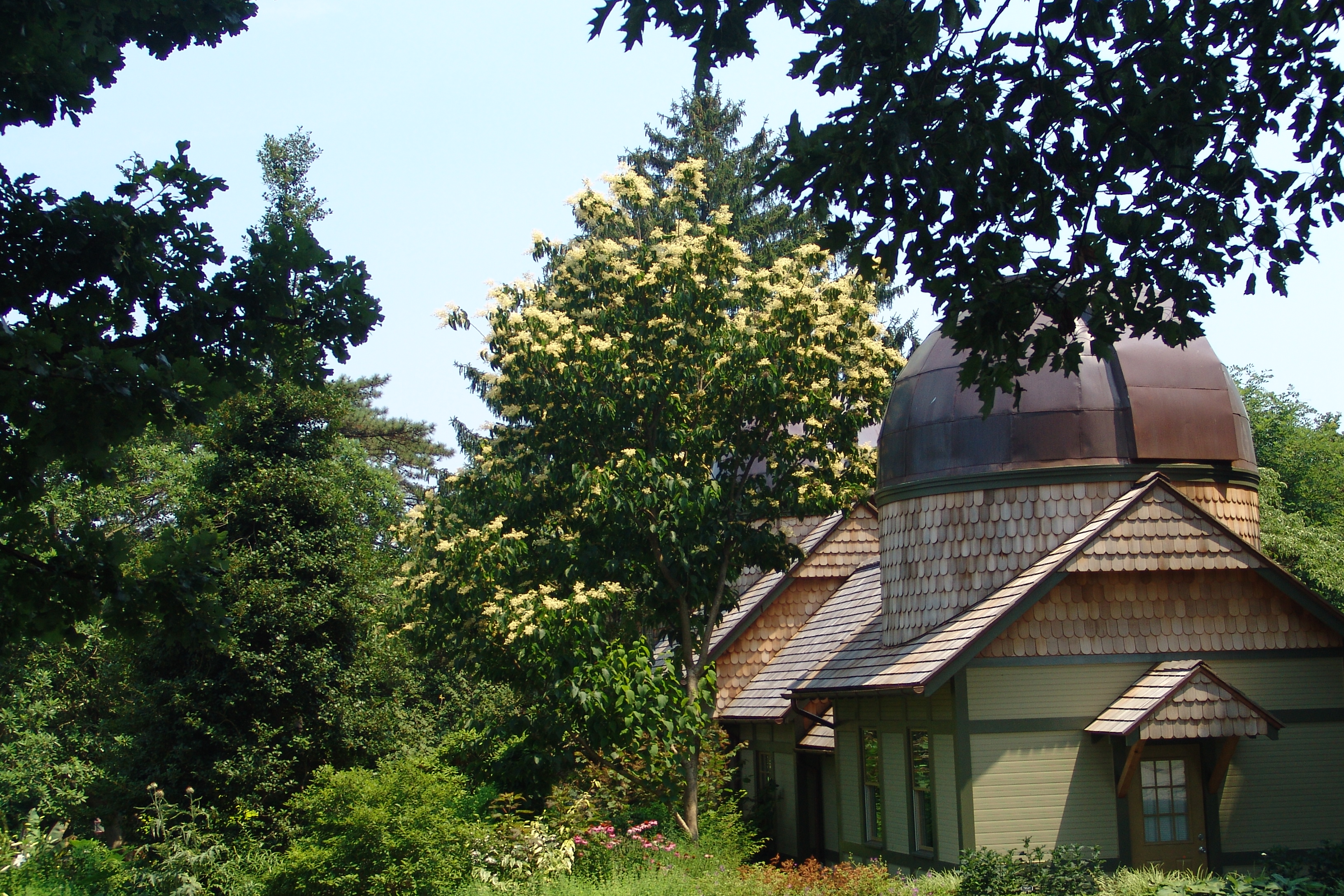
Today, all the trees are about thirty feet tall. The trees are now covered with pyramidal clusters of white flowers. Quick observation, several people have thought it was the Japanese tree lilac, Syringa reticulata, but Poliothyrsis blooms several weeks later.
I feel this tree holds great potential as a medium-sized, summer-flowering tree. It seems to be tolerant of difficult sites, and perhaps would make a tough street tree in urban situations.